
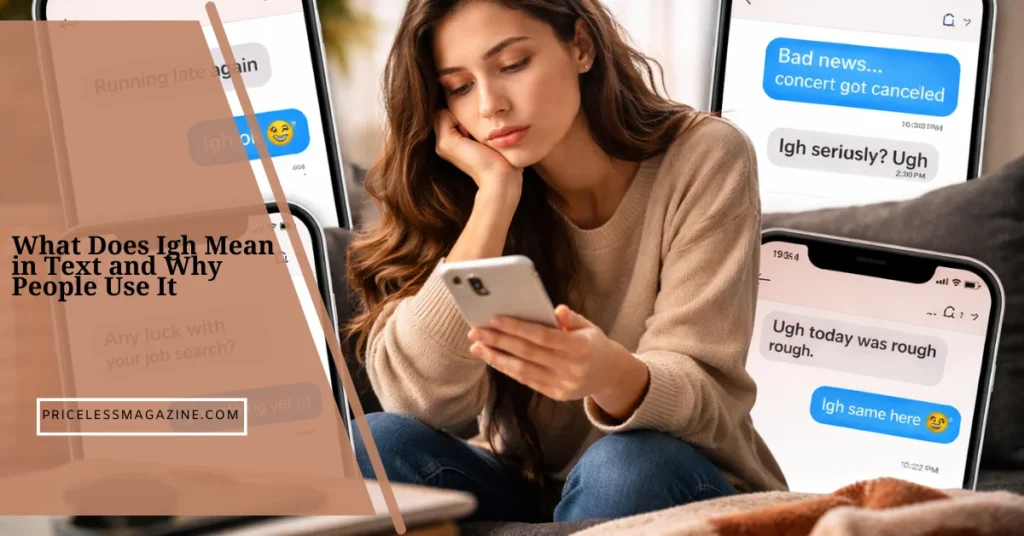

Igh is an informal expression used in texting to show frustration, hesitation, annoyance, emotional exhaustion, or a pause in thought. It often represents a sigh or groan that someone would make out loud but instead types during a conversation.
In this article, you will clearly understand what does igh mean in text, the emotions behind it, how people use it in real conversations, how it compares to similar expressions, and when it should or should not be used.
The Meaning of Igh in Texting
Igh does not have a dictionary definition. Its meaning depends on tone, context, and the situation in which it is used.
Emotional Context of Igh
Most of the time, igh reflects a feeling rather than a statement. It is used when someone feels mentally or emotionally overwhelmed and does not want to explain everything in detail.
It can show irritation, disappointment, tiredness, or a moment of hesitation.
Is Igh a Word or an Expression
Igh is not a formal word. It is a text based expression that imitates a sound people make when frustrated or drained.
Because texting lacks voice tone, people use expressions like igh to communicate emotion quickly.
How Igh Is Used in Conversations
Understanding what does igh mean in text becomes easier when you see how it appears in real conversations.
Casual Texting Between Friends
Among friends, igh is often used casually and understood immediately. It usually signals annoyance or reluctance without needing explanation.
It saves time and avoids long emotional messages.
Use in Social Media and DMs
On social platforms, igh is commonly used as a reaction to bad news, annoying updates, or repeated problems.
It works as a quick emotional response rather than a full reply.
Emotional Intent Behind Igh
The emotion behind igh can change depending on context.
Igh as Frustration
The most common meaning is frustration. It is often used when something annoying keeps happening or plans fall apart.
In this case, igh replaces a long complaint.
Igh as Disappointment
Sometimes igh expresses disappointment rather than anger. It may signal that someone expected better but feels let down.
The tone is softer but still emotional.
Igh as Reluctant Acceptance
In some conversations, igh can mean reluctant agreement. It shows that the person accepts something but is not happy about it.
This usage is common in friendly debates or plans.
Examples of Igh in Text Messages
Seeing examples makes the meaning clearer.
Short Reply Examples
Someone might text
Igh this day has been exhausting
Here, igh signals emotional tiredness before explaining more.
Another example
Igh fine I will go
This shows reluctant agreement.
Reaction Message Examples
If someone sends bad news, a reply might simply be
Igh
This means frustration or disappointment without needing extra words.
Igh vs Similar Text Expressions
People often confuse igh with other expressions.
Igh vs Ugh
Ugh is usually stronger and more negative. It clearly shows annoyance or disgust.
Igh is softer and often more emotional or tired rather than angry.
Igh vs Sigh
Sigh represents emotional exhaustion or sadness. Igh can include frustration along with exhaustion.
Sigh feels calmer while igh feels more irritated.
Igh vs Meh
Meh shows indifference. Igh shows emotional involvement.
If someone does not care, they use meh. If they care but feel annoyed, they use igh.
When Not to Use Igh
Even though it is common, igh is not always appropriate.
Professional Conversations
Igh should never be used in work emails or formal chats. It can seem unprofessional or unclear.
Professional settings require clear language.
Serious Emotional Situations
If someone is sharing serious feelings, replying with igh may appear dismissive.
In these cases, words are better than expressions.
Why People Use Igh Instead of Full Sentences
Understanding what does igh mean in text also involves understanding why people prefer it.
Faster Emotional Expression
Typing igh is quicker than explaining frustration in detail.
It communicates emotion instantly.
Avoiding Emotional Overload
Sometimes people do not want to talk. Igh allows them to acknowledge feelings without starting a long discussion.
Is Igh Negative or Positive
Igh is usually neutral to negative.
It is rarely positive, but it is not always angry either. Most of the time it falls somewhere between annoyance and emotional fatigue.
Tone and follow up messages determine the exact meaning.
How to Respond When Someone Texts Igh
Responding correctly depends on context.
If It Shows Frustration
You can reply with empathy. Asking what happened often works.
This shows you care without pushing.
If It Shows Reluctant Agreement
A simple acknowledgment is enough. Do not argue further.
This respects their emotional state.
Common Misunderstandings About Igh
Many people think igh is rude by default. In reality, it depends on the relationship.
Among friends, it is normal. In formal situations, it can feel inappropriate.
Another misunderstanding is assuming it always means anger, which is not true.
Why Understanding Text Expressions Matters
Texting lacks facial expressions and tone. Understanding expressions like igh helps prevent miscommunication.
It allows you to respond appropriately and maintain healthy conversations.
Frequently Asked Questions
Find answers to the most common questions
What does igh mean in text exactly?
It means frustration, hesitation, emotional pause, or reluctant acceptance depending on context.
Is igh a real word?
No. It is an informal text expression used to show emotion.
Is igh rude in texting?
It is not rude among friends but can feel unprofessional in formal settings.
Can igh mean agreement?
Yes. It can mean reluctant or unenthusiastic agreement.
How do you respond to igh?
Respond with empathy or ask what happened if appropriate.
Final Thoughts
Understanding what does igh mean in text helps you read emotions more accurately in digital conversations. It is a simple expression that carries frustration, tiredness, or hesitation without needing explanation.
Used correctly, it adds emotional depth to texting. Used in the wrong setting, it can cause confusion. Knowing the difference makes your communication clearer and more human.