
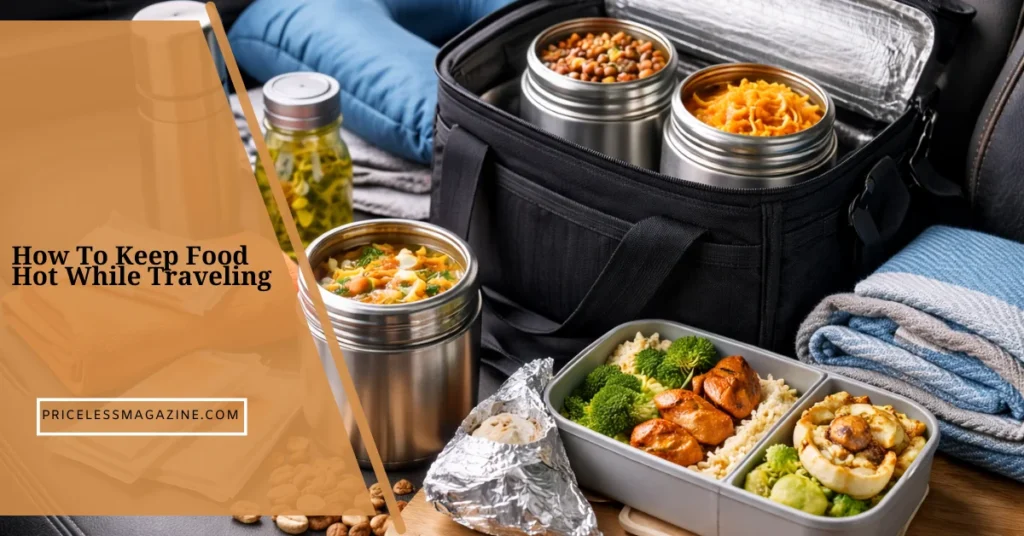

How to keep food hot while traveling comes down to three things you can control. Heat retention, smart preparation, and food safety timing. When these are handled correctly, hot food stays hot long enough to arrive fresh, safe, and enjoyable instead of lukewarm or spoiled.
The goal is not just warmth. The goal is keeping food above safe temperatures for the full travel window without drying it out or overcooking it.
Why Food Loses Heat During Travel
Food cools faster than people expect because heat constantly escapes into the surrounding air. Thin containers, air gaps, and frequent opening accelerate this process.
Moist foods lose heat quickly because steam escapes every time a lid is lifted. Dry foods lose heat through surface exposure. Travel adds vibration, movement, and temperature changes that increase heat loss even more.
Understanding this explains why stacking random tricks rarely works. The solution is reducing heat escape from every angle.
Best Containers To Keep Food Hot While Traveling
The container does more work than any other factor. A poor container cannot be fixed by better food or extra wrapping.
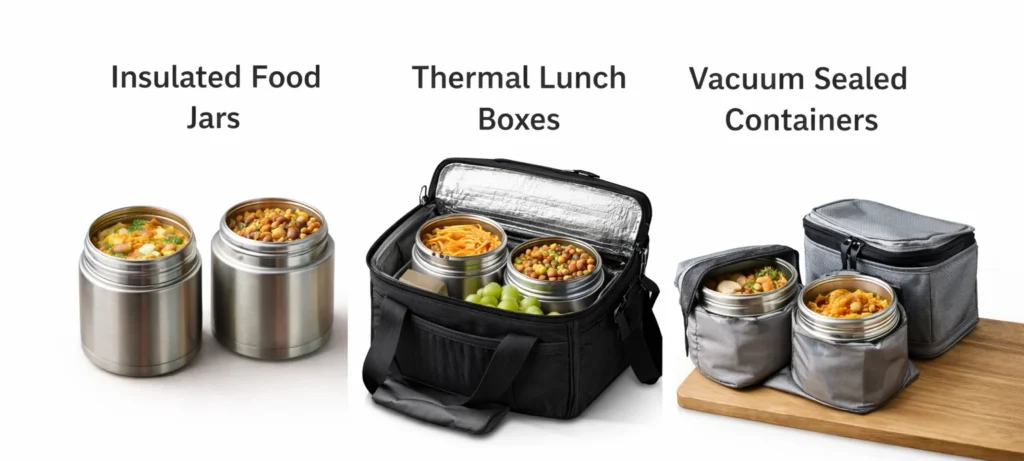
Insulated Food Jars
Insulated food jars are the most reliable option for individual portions. They use vacuum insulation to trap heat and slow temperature loss.
They work best for soups, stews, rice dishes, pasta, oatmeal, and cooked vegetables. Dense foods hold heat longer inside these jars.
Thermal Lunch Boxes
Thermal lunch boxes work well when transporting multiple containers together. The trapped air inside the box creates an additional insulation layer.
These boxes perform best when fully packed. Empty space inside allows heat to escape faster.
Vacuum Sealed Containers
Vacuum sealed containers reduce air contact, which slows cooling. They are especially useful for foods that dry out quickly like meats and casseroles.
They work best when combined with an insulated outer layer.
Preheating Methods That Actually Work
Preheating is the most ignored step and one of the most important.
Preheating Containers
Before adding food, fill containers with boiling water and let them sit for five minutes. This warms the interior walls so they do not steal heat from the food.
Empty the water immediately before filling with hot food.
Starting With Extra Hot Food
Food should be hotter than serving temperature when packed. Aim for steaming hot, not just warm.
Food cools rapidly in the first fifteen minutes. Starting hotter buys you more safe time.
Food Choices That Stay Hot Longer
Not all foods behave the same during travel.
Dense Foods Retain Heat Better
Thick foods like chili, curry, rice, mashed potatoes, and pasta retain heat far longer than thin broths or grilled items.
Air pockets and thin layers lose heat quickly.
Portion Size Matters
Larger portions stay hot longer. A nearly full container retains heat better than a half filled one because less air is trapped inside.
If transporting small portions, use smaller containers to reduce empty space.
How To Keep Food Hot While Traveling On Long Trips
Long trips require layered protection.
Layering Insulation
Place hot containers inside insulated bags. Then wrap them with towels or cloth to trap additional heat.
Each layer slows heat loss further. This method is especially effective for car travel.
Using Heat Packs Safely
Food safe heat packs can extend warmth on long trips. Place them outside the food container, never directly touching food.
Heat packs are supplements, not replacements for proper insulation.
Packing Order Matters
Pack the hottest items together. Separate cold items completely. Mixing temperatures causes rapid heat loss.
Hot food should always be the last item packed and the first item unpacked.
Food Safety Rules You Cannot Ignore
Keeping food hot is about safety, not just comfort. Hot food should stay above 140 degrees Fahrenheit. Below this range, bacteria grow quickly. If food drops below safe temperature for more than two hours, it should not be eaten. In hot weather, this window shortens. Reheating food later does not always make it safe again. Prevention matters more than rescue.
Common Mistakes That Cool Food Fast
- Many people unknowingly sabotage their efforts.
- Opening containers to check temperature releases trapped heat instantly.
- Using thin plastic containers causes rapid cooling.
- Wrapping hot food in foil without insulation does little to retain heat.
- Packing food too early before departure allows heat loss before travel even begins.
How To Keep Food Hot While Traveling Without Electricity
- Electricity is not required if insulation and timing are handled properly.
- Use insulated containers combined with preheating.
- Limit opening containers during travel.
- Choose foods that naturally retain heat.
- For trips under four hours, this method works reliably when executed correctly.
How To Keep Food Hot While Traveling For Different Situations
Different travel scenarios affect heat retention in different ways. Adjusting containers, packing order, and insulation based on the situation keeps food hot and safe until mealtime.
Road Trips
Road trips offer the most flexibility. Insulated bags, towels, and heat packs perform well.
Avoid placing food near cold air vents.
Work Commutes
Short commutes benefit most from insulated food jars. Pack food immediately before leaving.
Do not open until ready to eat.
Flights And Public Transport
Security rules limit liquids. Thick foods travel better than soups.
Choose sealed insulated containers and consume food as soon as possible after arrival.
What Actually Matters Vs Travel Food Myths
Myth. Wrapping food in foil keeps it hot.
Reality. Foil reflects heat but does not insulate.
Myth. Microwaving extra long keeps food hot longer.
Reality. Overheating dries food without extending retention.
Myth. Any insulated bag works the same.
Reality. Insulation thickness and seal quality matter.
Myth. Hot food is safe as long as it tastes warm.
Reality. Temperature thresholds determine safety, not taste.
Decision Based Guidance You Can Use Immediately
If travel time is under two hours, an insulated container and preheating are enough.
If travel time is two to four hours, layer insulation and choose dense foods.
If travel time exceeds four hours, consider reheating at destination or changing the food plan.
Ignore gimmicks and focus on physics. Heat retention is about limiting loss, not adding heat later.
How To Test Your Setup Before Traveling
Test your container at home. Pack hot food, wait the expected travel time, then check temperature. Adjust insulation based on results. This removes guesswork and prevents disappointment during real trips.
FAQs
Find answers to the most common questions
How long can food stay hot while traveling?
With proper insulation, most hot foods can stay above safe temperatures for two to four hours.
What is the best container to keep food hot?
Vacuum insulated food jars provide the longest heat retention for individual meals.
Can you keep food hot without electricity?
Yes. Insulated containers, preheating, and dense foods work well without power.
Does foil help keep food hot?
Foil alone does very little. It must be paired with insulation to be effective.
Is it safe to eat food that is warm but not hot?
No. Warm food may be in the danger zone where bacteria grow quickly.