
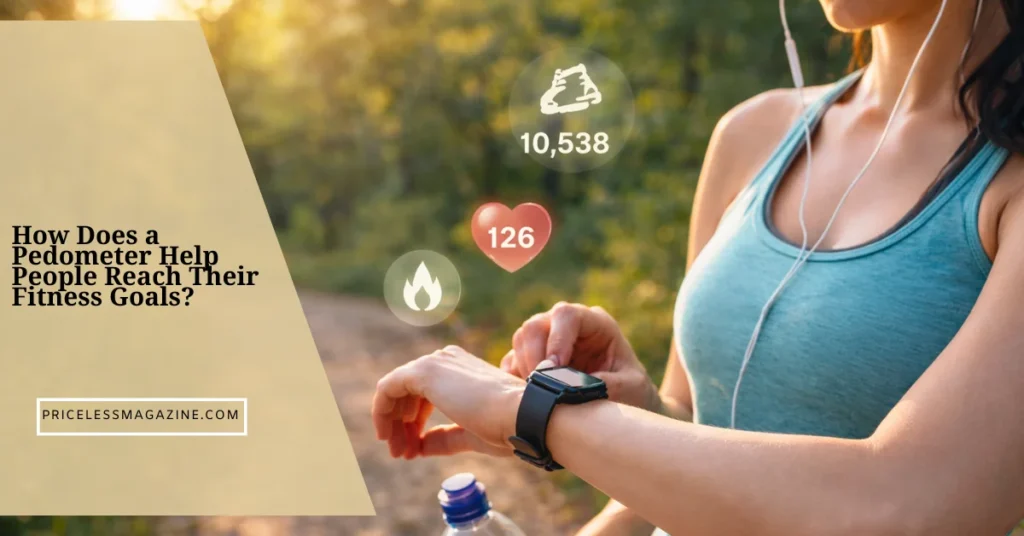

How does a pedometer help people reach their fitness goals? By turning daily movement into visible, measurable progress that builds motivation, consistency, and accountability. A pedometer makes activity tangible. It shows what you actually do, not what you plan to do, and that awareness changes behavior.
When steps are counted, goals become clearer, habits become easier to build, and fitness feels achievable for beginners and experienced walkers alike.
What Is a Pedometer and How Does It Work?
A pedometer is a simple device that counts steps as you move throughout the day. It detects motion, usually through movement sensors, and translates that motion into a step count.
Modern pedometers may also estimate distance walked and calories burned. Some are basic step counters, while others are part of wearable fitness trackers. At its core, a pedometer focuses on one thing: how much you move.
That simplicity is what makes it effective for many people.
Why Step Tracking Matters for Fitness Goals
Steps are an easy way to measure physical activity. Walking is low impact, accessible, and suitable for most fitness levels.
When steps are tracked, movement stops being vague. Instead of guessing whether you were active enough, you can see your daily steps and understand your activity patterns.
This awareness helps people shift from a sedentary lifestyle to a more active one without overwhelming workouts.
How a Pedometer Encourages Daily Movement
A pedometer gently pushes people to move more during everyday routines. Seeing a low step count often triggers small decisions like taking the stairs or walking a bit longer.
These small choices add up. A few extra steps here and there can significantly increase daily movement by the end of the day.
IMPORTANT
Fitness progress does not always come from intense workouts. Consistent daily movement matters just as much.
Goal Setting: How Pedometers Support Clear Fitness Targets
Fitness goals feel more achievable when they are specific. A pedometer helps set clear step goals, such as aiming for a certain number of daily steps.
These goals create structure. Instead of saying “be more active,” you have a measurable target to work toward.
Short term goals keep motivation high, while long term goals support lasting fitness improvement.
Motivation Through Visible Progress
One of the biggest benefits of using a pedometer is seeing progress in real time. Watching step counts increase creates a sense of achievement.
Daily and weekly comparisons show effort paying off. This visual feedback reinforces positive behavior and encourages consistency.
As one user put it, “Seeing my steps made movement feel rewarding, not forced.”
Accountability and Consistency With a Pedometer
A pedometer creates personal accountability. When steps are tracked, skipped movement becomes visible.
This does not create pressure. Instead, it builds awareness. Knowing that activity is recorded encourages people to stay consistent even on low motivation days.
Consistency, not intensity, is what leads to sustainable fitness habits.
How Pedometers Help Build Long Term Fitness Habits
Habits form through repetition and feedback. A pedometer provides both.
By tracking steps daily, walking becomes part of a routine. Over time, movement feels natural rather than planned.
This habit formation is especially helpful for people who struggle with strict workout programs. Walking becomes a lifestyle choice rather than a chore.
Health Benefits Linked to Step Tracking
Regular walking supports overall wellness. Step tracking encourages movement that can help with:
- Cardiovascular health
- Weight management
- Improved energy levels
- Better mood and mental clarity
These benefits grow over time as daily movement becomes consistent.
IMPORTANT
A pedometer supports wellness goals but should complement other healthy habits, not replace them.
Using a Pedometer for Different Fitness Levels
Pedometers work well for a wide range of users.
Beginners benefit from increased awareness and confidence. Active individuals use step tracking to maintain consistency on busy days. Older adults appreciate walking as a low impact exercise.
Because step tracking is flexible, it adapts to individual needs and fitness levels.
Real Life Use Cases of Pedometers
Many office workers use pedometers to counter long hours of sitting. Short walks during breaks can significantly increase daily steps.
Beginners often find pedometers motivating because walking feels approachable. Over time, step goals naturally increase.
Some people use pedometers to stay active without gym access, proving fitness does not require complex equipment.
Pedometer vs Fitness Tracker
| Feature | Pedometer | Fitness Tracker |
|---|---|---|
| Primary focus | Step counting | Steps, heart rate, sleep, activity |
| Data complexity | Very simple | More detailed and multi-metric |
| Ease of use | Easy and beginner friendly | Requires learning and setup |
| Motivation style | Focus on daily movement | Focus on multiple health metrics |
| Best for consistency | High, due to simplicity | Can vary depending on user |
| Ideal users | Beginners and casual walkers | Advanced or data-driven users |
| Risk of overwhelm | Very low | Higher for some users |
Limitations of Using a Pedometer
While pedometers are helpful, they have limitations.
They do not measure workout intensity or strength training. Step counts alone do not reflect overall fitness.
Understanding these limits helps set realistic expectations and prevents frustration.
How to Use a Pedometer Effectively
Consistency matters more than perfection. Wear the pedometer daily and check progress without obsessing over numbers.
Adjust step goals gradually based on comfort and lifestyle. Use step tracking as guidance, not pressure.
The goal is sustainable movement, not competition.
Why Pedometers Work Better Than Motivation Alone
Motivation comes and goes. Tracking creates structure even when motivation is low. A pedometer provides objective feedback. It turns effort into visible progress, reinforcing discipline over time. This is why step tracking supports long term fitness better than relying on motivation alone.
Frequently Asked Questions
Find answers to the most common questions
Are pedometers effective for beginners?
Yes. Pedometers are especially helpful for beginners because they focus on simple movement and gradual progress.
Do pedometers help with weight management?
They can support weight management by encouraging regular physical activity through walking.
Can step tracking improve consistency?
Yes. Visible progress and accountability make it easier to stay consistent over time.
Are pedometers useful without workouts?
Yes. Daily movement alone can significantly improve activity levels and overall wellness.
How often should step goals be adjusted?
Step goals should be adjusted gradually based on comfort, progress, and lifestyle changes.
Do pedometers help with long term fitness habits?
Yes. Repetition and feedback from step tracking support habit formation and sustainable fitness routines.
Final Takeaway: How a Pedometer Helps Reach Fitness Goals
A pedometer helps people reach their fitness goals by making movement measurable, progress visible, and habits sustainable. It encourages daily activity, supports clear goals, builds consistency, and reinforces accountability.
For many people, this simple tool is the bridge between intention and action.