
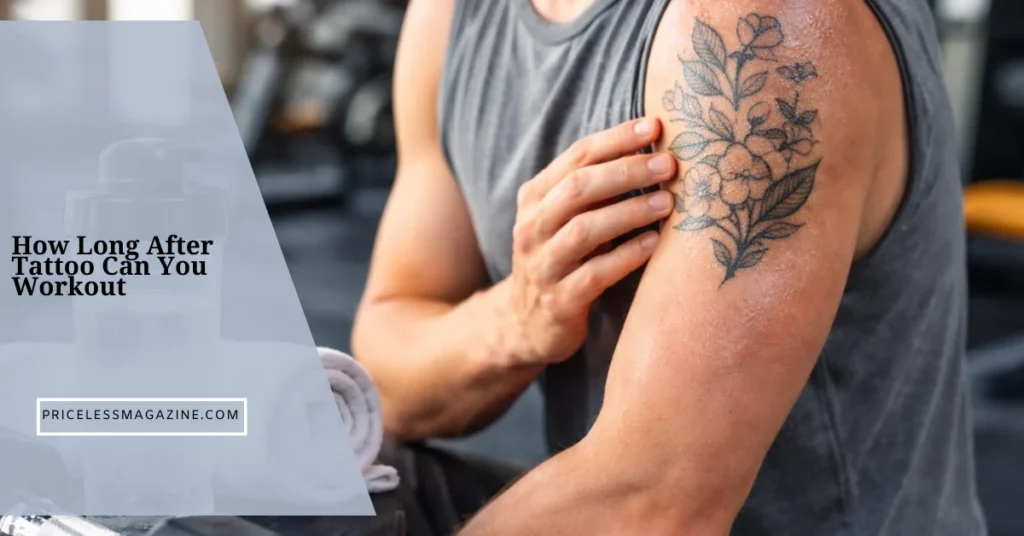

How long after tattoo can you workout depends on how your skin heals and how much physical stress the workout places on the tattooed area. In most cases, very light movement can resume after about forty eight hours, but structured workouts should wait at least five to seven days. Heavy training, intense sweating, or friction based exercise often requires even more time.
A tattoo is not surface art. It is controlled trauma to the skin. Treating it like healed skin too early is the most common reason people experience fading, irritation, or prolonged recovery.
What Happens To Your Skin After A Tattoo
When a tattoo is applied, needles puncture the skin thousands of times to deposit ink into the dermis. The body immediately responds with inflammation, swelling, and fluid release. This reaction is necessary for healing, but it also makes the area fragile.
During the first few days, the tattoo behaves like an open wound. Plasma leaks, the skin feels warm, and even minor irritation can reopen the surface. As days pass, the skin begins sealing, scabs form, and later the area peels as new skin replaces damaged layers.
Wound Healing Timeline
The healing process occurs in distinct phases, each with specific characteristics and duration. Below is a detailed breakdown of what to expect during each stage of recovery.
Inflammatory Phase
Days 1-3Redness, swelling, and fluid accumulation as the body’s initial response to injury. This phase controls bleeding and prevents infection.
Proliferative Phase
Days 4-7Sealing and scabbing occur as new tissue forms. Blood vessels rebuild and collagen deposition begins to strengthen the wound area.
Remodeling Phase
Weeks 2-4Peeling and rebuilding of skin layers. Collagen fibers reorganize, and the wound contracts, reducing scar tissue formation.
Maturation Phase
Weeks 4-6Deeper stabilization as the scar matures and gains strength. Collagen cross-linking increases, improving tensile strength.
Exercise interferes most during the first two stages when the skin barrier is weakest.
How Long After Tattoo Can You Workout Safely
How long after tattoo can you workout safely is best answered in phases rather than a single number. The goal is to avoid stressing the skin before it has sealed.
For most people, this timeline works well.
• First forty eight hours should be complete rest
• Days three to four allow light movement only
• Days five to seven allow gradual return to training
• Ten to fourteen days are safer for heavy or contact workouts
If the tattoo is large or located on a joint or high friction area, adding extra rest days significantly reduces long term risk.
Workout Types And When They Are Safe
Different workouts place different levels of stress on healing skin. Understanding how movement, sweat, and friction vary by exercise type helps prevent damage and delays in healing.
Light Workouts Like Walking Or Gentle Stretching
Light movement that does not stretch or rub the tattoo can often be resumed after the first forty eight hours. This level of activity helps circulation without disrupting healing.
Walking, gentle posture work, or mobility exercises away from the tattooed area are usually acceptable. However, stretching directly over the tattoo should still be avoided, as it can pull on fragile skin even if pain is minimal.
Cardio And Sweating Workouts
Cardio introduces sweat and repetitive motion. Sweat itself does not damage tattoo ink, but when sweat is trapped under clothing it softens scabs and weakens the skin barrier.
Most people can resume moderate cardio after four to five days if the tattoo shows no oozing and clothing does not rub the area. Long runs, cycling, or high heat workouts should still be postponed until the skin is clearly sealed.
Immediate cleaning after cardio is essential during early healing.
Weight Training And Friction Based Exercises
Weight training places the most stress on healing tattoos because it combines stretching, pressure, and contact with equipment. Benches, bars, grips, and tight clothing all create friction.
Waiting at least seven days is recommended before returning to weight training. If the tattoo is on the arms, shoulders, thighs, ribs, or back, even more time may be needed. These areas stretch constantly during lifting and are common sites for ink distortion.
How Tattoo Size And Placement Affect Workout Timing
The size and location of a tattoo directly influence how quickly the skin recovers. Larger tattoos and high movement areas need more rest to avoid stretching and ink distortion.
Small Tattoos Versus Large Tattoos
Small tattoos disrupt less skin and often heal faster. Large tattoos involve more inflammation and fluid retention, which increases sensitivity to movement and moisture.
As a general rule, larger tattoos benefit from an additional three to five days of reduced activity. Rushing recovery on large pieces often leads to uneven healing or faded sections.
High Friction And High Movement Areas
Placement plays a major role in recovery time. Areas that bend, twist, or rub against clothing heal more slowly.
High risk locations include inner arms, elbows, thighs, hips, ribs, ankles, and feet. Even light workouts can stress these areas early on. Low movement areas such as the upper chest or outer calf usually tolerate activity sooner.
Risks Of Working Out Too Soon After A Tattoo
Returning to exercise too early creates problems that may not be obvious immediately. Damage often appears days or weeks later.
Common Tattoo Aftercare Risks
Understanding potential complications during tattoo healing can help you take proper precautions and ensure your tattoo heals perfectly.
Infection from Bacteria
Bacteria entering open skin can cause infection, leading to redness, pus, swelling, and potentially serious health complications if not treated promptly.
Ink Fading
Premature scab picking or disruption can pull out ink, causing patchy areas, faded lines, and uneven color that requires touch-up work.
Line Distortion
Excessive stretching, swelling, or improper aftercare can distort tattoo lines, creating blurry edges and uneven artwork.
Prolonged Redness & Swelling
Extended inflammation beyond normal healing time may indicate allergic reaction, infection, or sensitivity to ink pigments.
Delayed Healing & Uneven Texture
Poor aftercare, underlying health conditions, or skin trauma can lead to slow healing, scarring, and uneven skin texture over the tattoo.
How To Protect Your Tattoo When You Return To Exercise
Returning to workouts safely requires reducing friction, controlling moisture, and maintaining hygiene. Small adjustments in clothing and aftercare make a major difference in healing quality.
Clothing And Friction Control
Loose, breathable clothing is essential during early workouts. Soft fabrics reduce rubbing and allow moisture to evaporate.
Compression gear, tight leggings, and rough synthetic fabrics should be avoided until healing is well underway. Comfort directly protects ink quality.
Hygiene And Aftercare Routine
Cleaning the tattoo immediately after workouts prevents sweat from sitting on healing skin.
A simple routine works best.
• Wash hands before touching the tattoo
• Clean gently with mild soap
• Pat dry, never rub
• Apply a thin layer of aftercare
Letting sweat dry on the tattoo increases irritation and slows healing.
Signs You Should Still Avoid Working Out
Your body signals when it is not ready for activity. Ignoring these signs increases damage risk.
Avoid workouts if you notice:
• Redness that is spreading or darkening
• Swelling that increases with movement
• Wet or oozing scabs
• Sharp pulling pain during motion
• Heat radiating from the tattoo
These indicate active healing and vulnerability.
What Actually Matters Versus Gym Myths
There is a lot of misinformation around tattoos and exercise.
Many believe sweat ruins tattoos, but friction and trapped moisture are the real issues. Wrapping tattoos in plastic during workouts often causes more harm by trapping sweat and bacteria. Pain level is also unreliable, since skin damage often occurs before pain appears.
Every tattoo, regardless of size, needs proper recovery time.
How Long After Tattoo Can You Workout Without Ink Damage
How long after tattoo can you workout without ink damage is usually when the surface has sealed and scabs are stable. This commonly occurs around day five to seven, though it varies by individual.
Ink damage happens when scabs are pulled off, skin is overstretched, or equipment rubs repeatedly against healing areas. Once peeling begins and redness fades, the risk drops significantly.
FAQs
Find answers to the most common questions
Can you workout the same day you get a tattoo?
No. The skin is open and highly vulnerable and should not be stressed.
Does sweating damage a new tattoo?
Sweat alone does not damage ink, but trapped moisture and friction do.
Can I lift weights after getting a tattoo?
Light lifting may be possible after five to seven days if the area is protected and pain free.
How long should I wait to run after a tattoo?
Running is often safe after four to five days if clothing does not rub the tattoo.
What happens if I workout too early?
Early workouts increase infection risk and can permanently affect ink clarity and line work.
The Bottom Line That Actually Helps
How long after tattoo can you workout is not about discipline or toughness. It is about skin biology and protecting permanent artwork. Light movement after forty eight hours is usually safe, moderate training after five to seven days is reasonable, and heavy workouts should wait until the skin has fully sealed.
Protect the tattoo first. Your fitness routine can wait.