
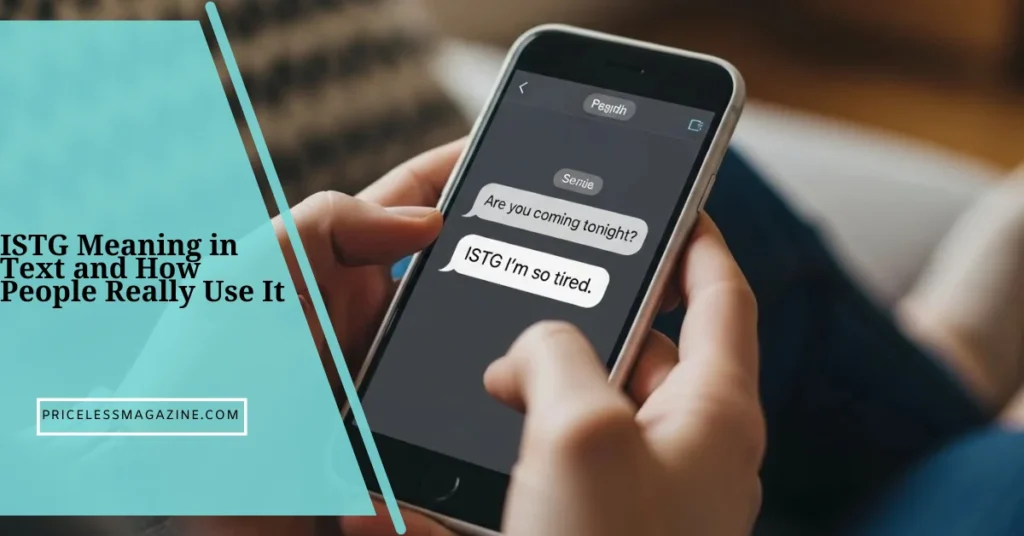

The istg meaning in text is something many people search when they first see this short slang in messages or on social media. You might come across it in a chat, a comment, or a post and wonder what it actually means. At first glance, it can look confusing because it is only four letters, but its meaning is very strong.
ISTG is one of those internet expressions that carries emotion, honesty, frustration, and sometimes humor all at once. The tone changes based on who is using it and how it is said. In this complete guide, you will learn what ISTG stands for, how it is used in daily chats, what emotions it shows, how it works on different social platforms, and whether it is rude or safe to use.
What Does ISTG Mean in Text
To understand how ISTG works, you first need to know its basic meaning.
Full Form of ISTG
ISTG stands for I Swear To God. It is a short form that people use in casual texting and online conversations. Instead of typing the full phrase, they shorten it to ISTG.
Basic Slang Meaning
In simple words, ISTG is used to:
- Show strong honesty
- Add seriousness to a statement
- Express frustration
- Emphasize emotions
It makes the message feel stronger and more emotional than normal words alone.
Emotional Meaning of ISTG in Messages
The same word can show different emotions depending on how it is used.
When ISTG Shows Anger
People often use ISTG when they are annoyed or angry. It helps them show how serious they feel.
Example:
ISTG if you do that one more time, I am done.
Here, ISTG adds frustration and warning to the message.
When ISTG Shows Excitement
ISTG is not always negative. Sometimes it shows excitement or surprise.
Example:
ISTG that movie was amazing.
In this case, it shows strong positive feeling.
When ISTG Shows Honesty
People also use ISTG to show they are being completely truthful.
Example:
ISTG I did not touch your phone.
Here, it means the person truly wants to prove honesty.
How ISTG Is Used in Everyday Chat
ISTG is common in daily texting between friends, couples, and online communities.
ISTG in Arguments
During small fights or heated discussions, ISTG is often used to add seriousness.
Example:
ISTG you never listen to what I say.
It shows emotional intensity and frustration.
ISTG in Friendly Conversations
Among friends, ISTG is often playful and not angry.
Example:
ISTG that pizza was the best thing I ate all week.
Here, it is just casual emphasis.
ISTG Meaning on Social Media Platforms
The istg meaning in text stays mostly the same across platforms, but the tone can shift based on content type.
ISTG Meaning on Snapchat
On Snapchat, ISTG is usually used in:
- Quick reactions
- Complaints
- Funny situations
- Emotional replies
Example:
ISTG this filter makes everyone look weird.
ISTG Meaning on TikTok
On TikTok, ISTG is commonly seen in:
- Video captions
- Comments
- Reaction posts
It often shows dramatic humor or surprise.
Example:
ISTG this video made my day.
ISTG Meaning on Instagram
On Instagram, ISTG is used in:
- Comment sections
- Story replies
- Private messages
It often reflects strong emotion related to photos or reels.
Examples of ISTG in Text Messages
Examples help you understand how tone changes.
Casual Usage Examples
- ISTG this coffee saved my whole morning.
- ISTG that song is stuck in my head.
- ISTG you always make me laugh.
These uses are friendly and light.
Emotional Usage Examples
- ISTG I cannot deal with this today.
- ISTG you broke my trust.
- ISTG I am telling the truth.
These uses carry deeper emotion.
Is ISTG Considered Rude
Many people worry if ISTG sounds rude or aggressive.
Casual vs Serious Tone
ISTG itself is not rude. It becomes rude only when used in:
- Angry arguments
- Insults
- Threatening messages
In friendly chats, it is usually harmless.
When ISTG May Sound Aggressive
ISTG sounds aggressive when combined with:
- Accusations
- Anger
- Blame
- Sarcasm
In those cases, the tone matters more than the word itself.
Can ISTG Be Used in Formal Communication
ISTG is informal slang and does not belong in professional settings.
Why It Is Not Professional
ISTG includes the phrase swear to God, which makes it:
- Too emotional
- Too casual
- Not suitable for business tone
Using it in emails, job messages, or official writing can look unprofessional.
When to Avoid Using ISTG
Avoid ISTG when:
- Talking to a boss
- Writing school essays
- Sending work emails
- Speaking with people you do not know well
Why ISTG Became Popular Online
Internet slang grows fast, and ISTG became popular for several reasons.
Short Form Typing Culture
People prefer short and quick words when texting. ISTG replaces a long emotional sentence with just four letters.
Viral Internet Language Trends
Social media, memes, reaction videos, and comments helped spread ISTG quickly. Once people see a word repeatedly, they start using it too.
ISTG Compared With Similar Slang Words
Some slang words feel similar but carry different tones.
ISTG vs OMG
OMG means oh my God and usually shows surprise.
ISTG shows seriousness, honesty, or strong emotion.
Example difference:
OMG that was funny.
ISTG that was funny.
ISTG feels more personal and emotional.
ISTG vs FR
FR means for real.
FR shows agreement or confirmation.
ISTG shows strong emotional truth.
Example:
FR that movie was good.
ISTG that movie was good.
ISTG sounds stronger.
Common Misunderstandings About ISTG
Many people misunderstand how ISTG works.
Thinking ISTG Is Always Angry
ISTG is often used during anger, but it is not always negative. Many people use it in fun and excitement.
Confusing ISTG With Religious Speech
Even though ISTG includes God in its full form, most people use it casually without religious meaning.
How to Respond When Someone Says ISTG
Your reply should match the tone.
Responding in Casual Chats
If someone uses ISTG casually, you can reply normally.
Example:
Friend: ISTG that game was intense.
You: It really was.
Responding in Serious Situations
If ISTG is used emotionally, respond with understanding.
Example:
Friend: ISTG I am so stressed today.
You: I am here for you.
Is ISTG Safe for Kids and Teens
ISTG is commonly used by teenagers and young adults.
Language Safety
ISTG itself is not a curse word. However, the emotion behind it may involve:
- Frustration
- Anger
- Strong opinions
Parents may want to explain its meaning to younger users so they understand tone.
Social Awareness
Teens often use ISTG without thinking about how serious it sounds. Learning tone awareness is helpful.
Cultural Influence on ISTG Usage
Different cultures view ISTG differently.
Casual Cultures
In casual texting cultures, ISTG is seen as normal and playful.
Conservative Cultures
In more conservative environments, mentioning God casually may feel inappropriate.
Why People Use ISTG Instead of Full Sentences
Speed and emotion are key reasons.
Faster Communication
Typing ISTG is quicker than typing a full emotional explanation.
Emotional Shortcut
It instantly tells the reader that the speaker feels strongly.
Does ISTG Always Mean Truth
People often assume ISTG means absolute truth, but that is not always the case.
Emotional Truth vs Actual Truth
Sometimes people use ISTG to express emotion, not actual facts.
Example:
ISTG that was the worst day ever.
It shows feeling, not literal truth.
When ISTG Might Cause Misunderstanding
Because ISTG carries emotion, it can sometimes confuse people.
Text Without Tone
Text messages do not show voice tone, so ISTG can sound harsher than intended.
Cultural Differences
Some people may take ISTG more seriously than others.
Should You Stop Using ISTG
You do not need to stop using it completely.
When ISTG Is Fine
- With close friends
- In casual chats
- In humorous situations
When ISTG Should Be Avoided
- With strangers
- In serious arguments
- In professional communication
How ISTG Is Used in Different Age Groups
Slang changes based on age.
Teenagers
Teenagers use ISTG very casually in daily texting.
Young Adults
Young adults use it in memes, jokes, and serious chats.
Older Adults
Older users may not recognize ISTG at all or may find it confusing.
Why the Search Term ISTG Meaning in Text Is So Popular
People keep searching this phrase because:
New Users Enter the Internet Daily
New users constantly discover slang for the first time.
Slang Evolves Quickly
Words like ISTG spread faster than dictionaries can update.
The Most Accurate Explanation of ISTG Meaning in Text
The clearest explanation of istg meaning in text is this:
ISTG means I Swear To God and is used to express strong emotion, honesty, frustration, excitement, or emphasis in casual online conversations.
It is not a curse word, but it carries emotional weight. The meaning always depends on tone and situation.
Frequently Asked Questions
Find answers to the most common questions
What is istg meaning in text?
It means I Swear To God and shows strong emotion or emphasis.
What does ISTG stand for?
ISTG stands for I Swear To God.
Is ISTG a bad word?
No, it is not a curse word, but it carries emotional weight.
What does ISTG mean on Snapchat?
It is used to show frustration, excitement, or strong feelings.
What does ISTG mean on TikTok?
It appears in captions and comments to express strong reactions.
Can ISTG be used jokingly?
Yes, many people use it in playful conversations.
Is ISTG rude to use?
It depends on tone. In anger it may sound rude, but casually it is fine.
Can ISTG be used with friends?
Yes, it is commonly used among friends.
Should ISTG be used at work?
No, it is not professional language.
How do you reply to ISTG?
Reply based on the tone, either casually or with emotional support.
Conclusion
The istg meaning in text goes far beyond just four letters. ISTG stands for I Swear To God and is used to show strong emotion, honesty, frustration, excitement, or seriousness in casual communication. It is widely used on Snapchat, TikTok, Instagram, and in private chats.
ISTG is not rude by itself, but it can sound aggressive when used in anger. It is not suitable for professional communication and should be used carefully based on audience and situation.
Understanding how ISTG works helps you read messages better and respond with the right tone. Like most slang words, its power comes from emotion, not definition alone.